



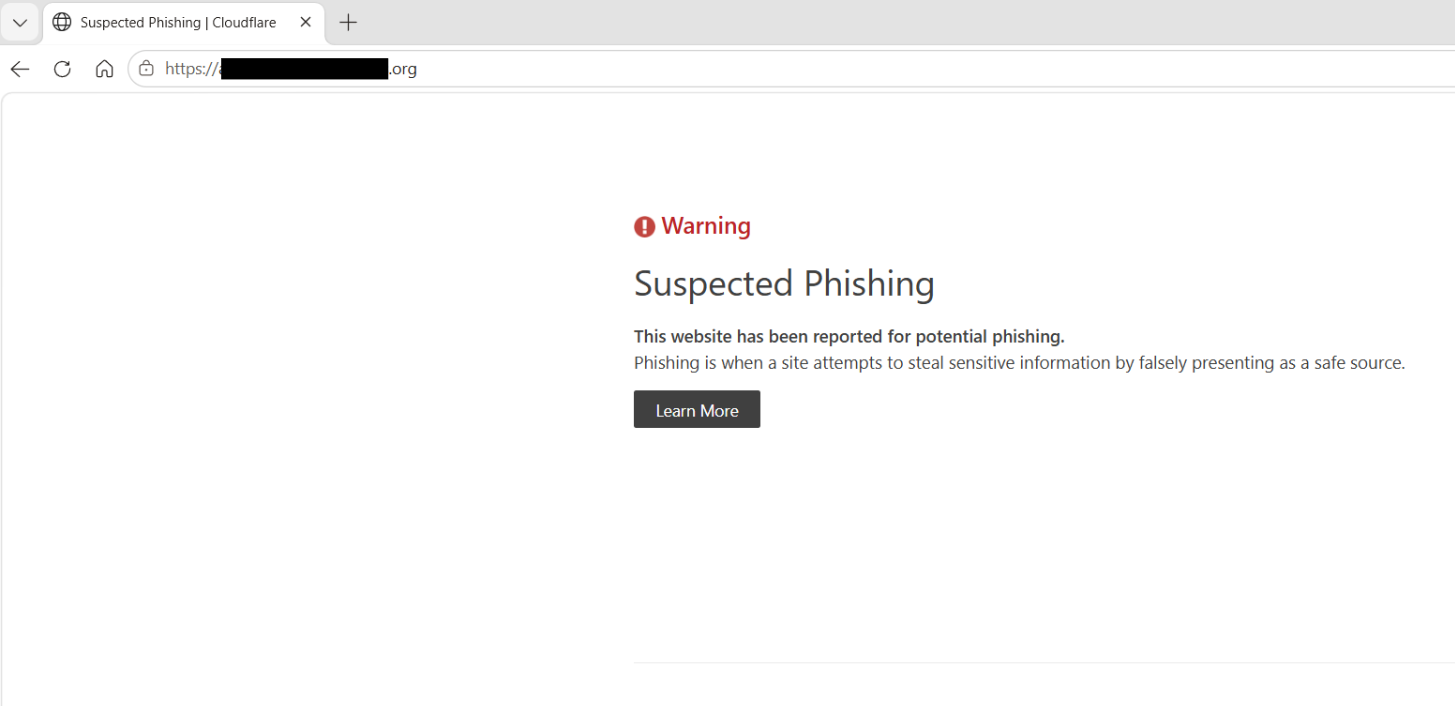
Someone can copy your entire website in about ten minutes. They register a domain that looks almost identical to yours, clone your pages, swap in their own phone number and email address, and start collecting whatever walks in the door.
This isn't hypothetical. We caught it happening to one of our clients recently, and the copy was so close that most people would never have questioned it.
The whole attack depends on your eyes skipping over one small detail. A few of the common tricks:
Once they own the domain, copying your site is trivial. Your pages are public. Your logo, your photos, your service descriptions, your testimonials — all of it is right there to be lifted.
The site we found was a near-exact duplicate. Same layout, same branding, same copy. Two things were different: the phone number and the email address.
That's the entire scam. Everything a visitor uses to judge whether a business is real was authentic, because it was stolen from a real business. The only parts that had been changed were the parts that route the victim to the attacker.
We can't say for certain what they intended to do with it. Sites like this typically get used to intercept prospective customers, collect deposits or payment details, harvest credentials, or lend credibility to phishing emails and invoice fraud. None of the possibilities are good.
Here's the uncomfortable part: a lookalike site does not appear anywhere in your own systems. It doesn't touch your network. It doesn't generate an alert in your email security. It doesn't show up in your analytics. Your firewall has no idea it exists.
Unless someone is actively watching for newly registered domains that resemble yours, the only way you find out is when a customer calls confused about a payment they made, or an invoice they never received from you. By that point the site has usually been running for months.
That's the pattern we see over and over. It isn't that these operations are sophisticated. It's that nobody is looking.
The good news is that you have more leverage than most business owners realize. A site impersonating your business violates the terms of service of essentially every registrar and hosting provider in existence, and it's straightforward trademark and consumer-fraud territory. Providers generally do not want to host it.
The process looks like this:
In our client's case, the site was down within 72 hours of our request. That's fast, but it's not unusual when the report is well documented and goes to the right place. A vague complaint sent to a generic support inbox can sit for weeks.
Domain impersonation monitoring is part of what we do for our clients — alongside the rest of the security stack. It's the reason we found this one before it caused real damage, and the reason it was gone in three days instead of running quietly for a year.
If you don't currently have anyone watching for this, it's worth a conversation. Give us a call at (516) 543-3170 and we'll take a look at what's out there under your name.