



In today’s interconnected digital landscape, email remains a cornerstone of communication for businesses, organizations, and individuals alike. However, with the convenience and ubiquity of email comes the ever-present threat of cyberattacks and phishing attempts. In the battle against email fraud and spoofing, DMARC (Domain-based Message Authentication, Reporting, and Conformance) emerges as a crucial tool for ensuring email security and maintaining trust in digital communication channels.
DMARC is an email authentication protocol designed to combat email spoofing, phishing, and other forms of email-based fraud. It operates by enabling domain owners to specify how incoming emails from their domain should be handled if they fail authentication checks. Essentially, DMARC helps email receivers determine whether an email message claiming to come from a specific domain is legitimate or forged.
DMARC builds upon two existing email authentication protocols: SPF (Sender Policy Framework) and DKIM (DomainKeys Identified Mail). SPF allows domain owners to specify which mail servers are authorized to send emails on behalf of their domain, while DKIM enables the signing of outgoing emails with cryptographic signatures, verifying their authenticity.
When an email receiver (such as an email service provider or corporate mail server) receives an email claiming to be from a specific domain, it checks the SPF and DKIM records of that domain to authenticate the message. If the email passes both SPF and DKIM checks, it is considered legitimate. However, if it fails either or both checks, DMARC policies come into play.
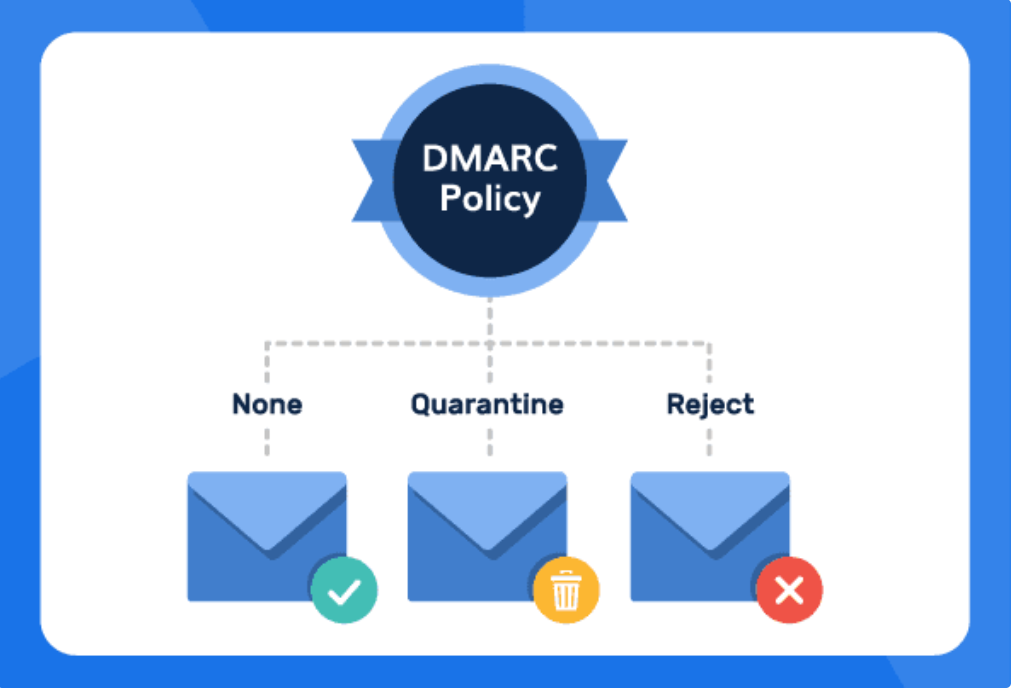
DMARC enables domain owners to set policies instructing email receivers on how to handle emails that fail authentication checks. These policies can include options such as quarantining the message, marking it as spam, or outright rejecting it. Additionally, DMARC provides reporting mechanisms that allow domain owners to monitor and analyze email traffic, identifying potential sources of abuse and unauthorized use of their domains.
There are many websites to check if email security records are set up properly. dmarcian.com is a quick and easy website to check. On the homepage, it will have an area to type in your domain name. Once you type in your domain it will display if your records are setup properly. If any of them are getting red Xs then they need your immediate attention.
In an era where cyber threats are omnipresent and email remains a primary vector for malicious activity, the importance of DMARC in securing digital communication cannot be overstated. By leveraging DMARC’s authentication and policy enforcement capabilities, domain owners can fortify their email infrastructure, protect their brand reputation, and foster trust among their stakeholders. As organizations continue to prioritize cybersecurity initiatives, DMARC stands as a critical component of a comprehensive email security strategy, enabling safer and more secure communication in an increasingly interconnected world.